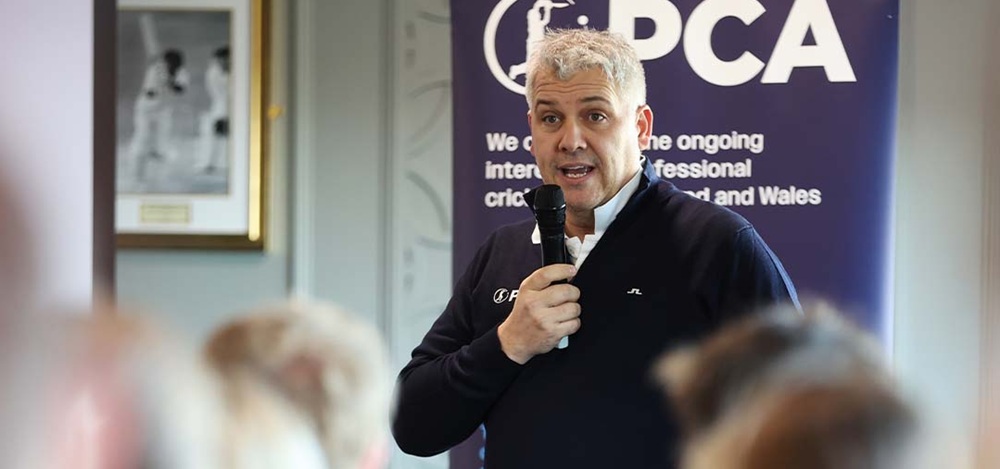
Ian Thomas has enjoyed a twenty year career working for the Professional Cricketers Association who he first came into contact with as a Player Rep at Glamorgan. When he retired from playing, he became only their 5th regional Personal Development Manager, a role he continued until 2011 when he became the national lead for Personal Development and welfare. In 2017, he progressed further becoming Managing Director, gaining a vast amount of experience across a range of areas including education and training, mental health support, charity, legal and regulatory work, managing communications department and now has the PCA EDI department within member services.
How easy was your transition from player to PDM?
My player rep role meant I got to learn about all the PCA services and seeing players who’d always been at a club, lost their contract and left to fend for themselves helped shape a lot of my work at the PCA. I also had a Sports Development degree which definitely helped me get the role and when you spend a lot of time encouraging players to invest in their development, it definitely gave me credibility. I was also lucky, if I hadn’t been released that year who knows whether the role I went into would have been there but it was a good time aged 26 to get out, you don’t want to be hanging around if you’re not going to achieve what you want to.
Is there anything you’d have done differently?
Whilst my sports development degree gave me a good foundation in sports administration, if I had my time again I’d probably do law, it would have been really useful for many of the situations I have found myself in from dealing with employment, regulation, or disciplinary matters.
What other qualifications have helped you in your role?
I have done various courses over the years. I did a post grad certificate in elite sport counselling via the University of Victoria in Australia which ultimately shaped my practice to coach and advise, I did some UK Sport qualifications, and gained an ILM Level 5 in coaching and mentoring and also become a qualified Mbti Practioner. Since 2017 I have not had as much time to invest in qualifications, but the job itself has been a steep learning curve, it provides me with so much variety and I love that.
What are the main changes you’ve noticed in your time working at the PCA?
I’d say there have been two big areas of change, firstly the introduction of our women members and the development of the professional game domestically has led to a lot more female members and it’s been exciting time learning how to diversify how we support those players and having the joint male and female team meetings as we do now is something I’d never thought would happen when I started in 2006. The other aspect is how global cricket is now and that we have members picking up international contracts so we’ve had to adapt how we support those players sometimes when they’ve been based in war zones or terror attack situations.
Have you noticed a change in the player and association relationship?
Generally the players have always been very positive about the services we offer but obviously there are difficult situations when things aren’t going the players’ way when naturally we’re held to account and the relationship is tested. The key is that the more you engage with your association the more you’ll get from it and understand what it can do for you so education for us is key, we need to explain every year what their money gets them, we’re selling them an opportunity for support and guidance.
How has the attitude to wellbeing support and other services changed?
In the early days, we were possibly seen as a bit of a spy in the player environment and people questioned our role but through education and building relationships and services, there’s a much better understanding from players and the team staff that we’re there to support and to make the team and the individual successful. We’re fortunate to be well resourced but a player association can only be as good as the funding it receives.
How have you benefitted from being involved with the PPF?
I’d say I’m a very grateful graduate from the PPF network. It’s all about coming together and sharing practice and you can’t underestimate how much we’ve all helped each other. For example the PFA team has been in place for 15 or 20 years longer and they were a fantastic support to me. The regular meetings are great and being able to get different sports together to discuss issues such as safeguarding, you can’t buy that sort of opportunity. We’ve all got different resources so you can never compare but to see younger organisations coming in and doing amazing things on a shoestring using the PPF support is really important.
What do you find most satisfying about your role?
I’m in a very privileged position being able to help people in their hours of need, it’s not me personally but as an organisation we can be a go-between. For example recently we had a past player whose child had cancer and I could liaise with him and the Cricketers Trust to take the pressure off financially whilst he can’t work during treatment. It’s an honour to have that ability to help and make a difference in a variety of ways.
What have you found most challenging?
Probably trying to find balance between family life and work. The job is all encompassing, I never turn the phone off on holiday. I feel I owe it to the members, there are others that don’t need to do that but I feel my position commands that availability and that’s the challenge to switch off but it’s not a 9-5 job for players and they need to know you’re available.
What is the maxim you’ve lived by?
This wouldn’t always work in a CEO role, but I have always said what I feel and think and I can’t help but speak truthfully and honestly. I think it’s served me well, people respect and like me for that. I also think it’s important not to lose sight of how lucky I am to be able to help players in the role that I have.
COPYRIGHT 2026 PROFESSIONAL PLAYERS FEDERATION | Website designed by The Smarter Web Company