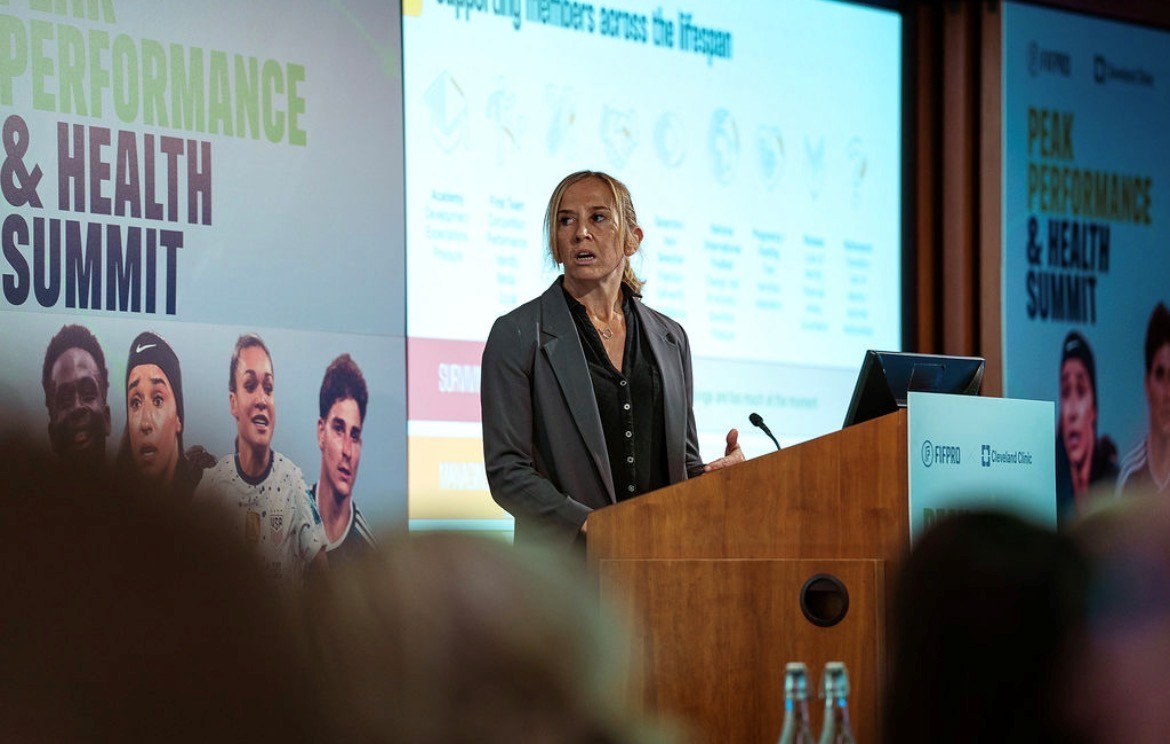
Dr. Yvie Ryan joined the PFA as their Director of Wellbeing in September 2025 and sits on the PPF Wellbeing Committee. With a background as a Sports and Exercise Psychologist, she has spent most of her career working in elite sport, having worked in Olympic sport and spent 12 seasons at Liverpool FC before joining the PFA where she has been able to apply her expertise to a broader player base, developing bespoke pathways for players at every level.
What attracted you to the role at the PFA?
At Liverpool I actually moved from working with the first team to academy level which is unusual as most people go the other way but I was fascinated by youth development and the teenage brain and how the mindset at the start of a player’s career can impact their future career. Moving to the PFA meant I had the opportunity to work at a much broader level; rather than supporting one club or group of athletes, I was able to think about wellbeing across the whole profession and influence systems as well as individual support.
What are your key areas of work?
I suppose there are three levels and each one needs to connect. Firstly the individual level making sure members can access support with the appropriate referral and triage services. Then there’s the organisational level, putting in place education workshops to ensure we’re raising awareness and intervening further upstream before a player reaches crisis point; then there’s the systemic level; looking at how football itself can become better at recognising and responding to wellbeing needs. This includes working collectively with partners to ensure we’ve got a joined up approach and appropriate pathways to support players. For example, creating inclusive environments for neurodiverse players. I’ve spent a lot of time getting to know the wider ecosystem and where everyone fits in and then using data to identify the gaps and understand the needs of our members.
Have you identified any key trends in your time so far at the PFA?
The increasing professionalisation of the women’s game with the WSL2 now becoming professional has meant we’ve had to further expand our wellbeing provision for female players , creating support for areas which impact women more such as eating disorders, body image issues or RED-S (Relative Energy Deficiency in Sport). We do look at data but we have to bear in mind some groups might not be reporting issues and so we need to constantly check if our provision is fit for purpose with every new cohort that comes through.
Another massive issue is addiction. Almost a quarter of our referrals are addiction related with residential treatments increasing and the stats showing that addiction becomes worse when a player retires. So again we’re looking at what we can do further upstream to build resilience and forward planning for retirement from football, so they don’t turn to gambling, drugs or alcohol.
We’ve recently introduced a new support pathway alongside Sporting Chance called ‘Kick The Habit’. This is for players wanting to come off snus/nicotine pouches as these can be a gateway drug and can be used whilst playing as they’re more accepted but when players leave the game there aren’t so many structures to protect them from moving onto other more serious forms of addiction. Whilst the data suggests women aren’t showing addiction problems so far, we are seeing women using nicotine pouches to try and ease anxiety, for example over one year contracts.
With all of this, it’s really important to measure return on investment and understand when players have had therapy, how successful it has been and if the pathways we’ve offered have been clinically robust.
What do you gain most satisfaction from in your role?
You look at the number of people who we’ve helped and it’s nice to receive messages from players or a club that someone in my team has done a great job supporting them. I went to Sporting Chance and spoke to players about how life changing the residential programme had been. They had been suicidal, their marriages were over and they didn’t want to be here and didn’t know how to deal with addiction and now they’ve got hope and can see a different future. An application is just a piece of paper but when you meet the person behind the paper, you really feel that you have had an impact. But those members are at crisis point, so actually it would be more rewarding to see the number of members being treated for addiction going down which would mean we are having an impact at a much greater level.
What do you find most challenging in your role?
Modern football is complex, there’s not just one issue – performance, injury, relationships, finance, social media, career uncertainty – all these interact and making sure we have pathways to respond and that we can be flexible and have expertise to recognise the issues is challenging. One of the biggest challenges is making sure we don’t medicalise every difficulty, but equally don’t minimize genuine clinical need either; it’s a balance.
There’s also still a stigma around help seeking especially in an environment where resilience and high performance are praised highly. We also need to work out who are the harder to reach groups as those players that present to us are predominantly white British and so we need to ensure we are able to reach ALL of our members. For younger people who communicate so much digitally, going to speak to a ‘therapist’ can be a bit scary so in our workshops and when we talk to players, we explain what the counselling experience will look like, it’s not scary, it’s just having a conversation but that can still be really daunting so we try and dispel the myths.
Is there a key area you would like to focus on in the future?
I’d like us to continue to develop a genuinely evidence-informed wellbeing service, one where we understand what players need, have strong clinical and safeguarding governance, have excellent referral pathways and are equally strong on prevention and education. I think working with our youth advisory department and our partners to start with youth football as parent education is really important. Players are coming into clubs at younger and younger ages and there are some social media influencers putting players on social media in exchange for kit etc, which leaves players feeling they have to live up to very high expectations at a really young age. The pressure from parents can also be intense so therefore parent education is key. We can do some really good work in the workshops which is then all undone at home so getting parents to understand the impact they’re having is so fundamental to addressing this issue.
Is there a piece of advice given to you that has helped your career?
I used to work with Dr Steve Peters who wrote The Chimp Paradox. He mentored me for 3 years and the one thing he used to say is there are no guarantees. The only things guaranteed are that one day you’ll die and at some point during the day you’ll need the loo! People often have a need to feel in control and get anxious over the future or things they can’t control however, players need to learn how to manage an uncertain and ever changing world and be able to cope with it.
How important is collaboration when it comes to Wellbeing support?
One organisation can’t meet all the demands on their own. Collaboration with the wider sporting eco system and specialist organisations within mental health and wellbeing is really important. There are definitely areas that we can address collectively as Player Associations and there’s value in shared learning and developing more consistent approaches. Understanding our areas of expertise and responsibilities and sharing good practice whilst all the time, checking that player wellbeing sits at the core of everything we do; asking ‘how is this going to benefit the player or member’ and ensuring we are always listening to their voice.
COPYRIGHT 2026 PROFESSIONAL PLAYERS FEDERATION | Website designed by The Smarter Web Company