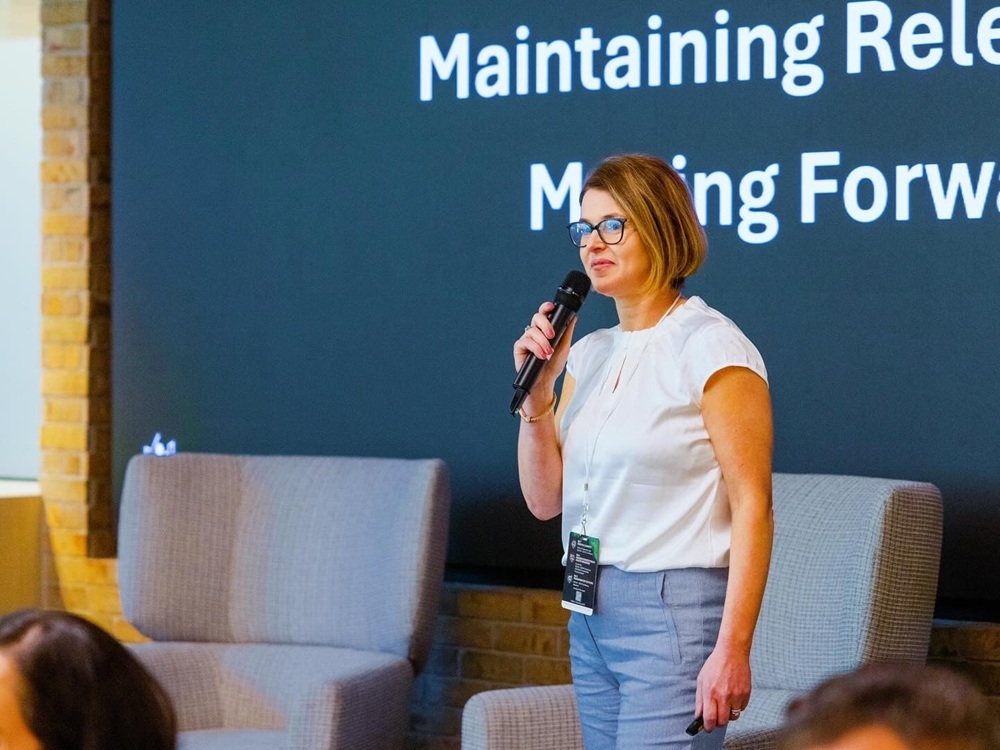
Deirdre Lyons joined Rugby Players Ireland in 2013 having previously spent 15 years working in high performance sport at the Irish Institute of Sport. She has a PhD in athletic career transitions and is also a qualified Sports Psychologist. Having led the Players Development Programme, Deirdre now heads the past players programme, Beyond The Game. One of the first meetings she attended was the PPF Education and Training Committee at St George’s Park back in 2013 and she has since played a key role on this Committee sharing new ideas and working with other Player Associations to find ways of improving the support provided to players.
What are the benefits of working with other Player Associations as part of the PPF Education & Training Committee?
I think it’s that idea of collective intelligence, having access to people to help you do your job who are willing to share their knowledge and experience. It’s a very safe space, there are no silly questions and it’s a really welcoming group of people. Every association is at different stages and each learns from those that have gone before. For new associations or members of the group, you don’t have to start a programme from scratch, and you can learn not just from what has worked but also what hasn’t. Working collaboratively raises the standard for everyone and it saves time and resources especially for smaller associations.
What role has the PPF played in building a community within the Player Association network?
Supporting smaller associations is key, it can be really isolating working as a PDM, you may be the only person in your area or club and the PPF brings that sense of community, being part of a wider team and realizing you’re not the only person doing it. We all work in different contexts but often tackle universal issues supporting players who are transitioning out of the game or getting players to engage, so being able to share resources and suggest helpful programmes allows smaller associations to be more resourceful. And as the group changes, someone benefits you and then you pay it forward.
It’s a great testament that it’s still going strong 13 years later and that so many other groups have formed too in other areas such as women’s sport, mental wellbeing and EDI.
The Education & Training Committee tends to meet in person, why is that helpful?
PDMs love to talk, love to share, it’s in our nature so meetings in person are invaluable, even though we have to fly over generally, it’s so much easier to build relationships and it makes it easier to pick up the phone afterwards and have more detailed conversations about specific things. I always encourage new PDMs to come along and meet others working in the same space. Whether it’s the English Institute of Sport or Sport Scotland, we’re all helping players prepare for life beyond sport, transition, dual career. We’ve even got together with the wider teams at the RPA and PCA. We’re not sharing trade secrets, the best thing is that we’re all there to help regardless of the sport.
How did you establish Beyond The Game?
While many organisations across the PPF and World Players’ Associations networks provide strong, structured support for current players, we at Rugby Players Ireland found a significant gap once players leave the game. Too often, support during transition was fragmented or reactive, with former players only re-engaging when they were already struggling. With funding from the Global Rugby Players Foundation we have addressed this gap through the development of Beyond the Game - a dedicated, proactive programme for past players. The programme forms part of an international pilot, alongside initiatives in South Africa, New Zealand and the Pacific Islands.
Beyond the Game is built around four integrated pillars - Care, Change, Community and Connection - providing former players with structured transition support, career and life coaching, access to brain health screening and mental health services, tailored partner benefits, private peer networks, scholarship opportunities and a programme of events designed to sustain engagement and long-term wellbeing beyond professional rugby.
What has been the response from players?
The feedback has been great. We’ve been able to reframe transition out of the game as something really positive highlighting all the transferable skills players have and establishing a really proactive network. Our most recent newsletter had news, partnerships, job postings, education opportunities and it’s clear from the responses that past players enjoy feeling part of a community that they were once involved in and having past players in our team really helps with that messaging.
How do you see player development evolving in the future?
I think it’s important that there is a clearly defined support structure for players’ entire careers from academy to past players so that the support is in place for male and female players all along their journey, offering different programmes at different stages and that player always know where to turn and are feeling positive about contributing back into the sport once they finish playing. If they feel like that, it’s not only good for them but also good for the game to thrive.
What mantra do you use when approaching your job?
“People first, always.” At the heart of my work is seeing players as people before anything else. That’s what makes the role so rewarding. We’re trusted with the parts of players that others don’t always see: their strengths and vulnerabilities, their motivations, goals and uncertainties. To be alongside someone at that level is a real privilege. The work requires patience though. I genuinely believe that people already carry the answers within themselves; my role isn’t to direct them down a particular path, but to walk beside them, help them make sense of their thinking, and support them as they find the path that’s right for them.
How do you switch off from your job?
Family is at the core of everything for me - my husband and three boys are all involved in sport, and staying connected with my siblings is really important. Exercise helps me switch off too; running and Pilates are essential for my mental health. I’m fortunate to have a strong support network through my team at Rugby Players Ireland, the International Rugby Players Association, and the wider PPF. And while balance matters, I genuinely love what I do.
COPYRIGHT 2026 PROFESSIONAL PLAYERS FEDERATION | Website designed by The Smarter Web Company